Tribute to Bob Glover, PhD
written by Christopher T. King, PhD
May 2026
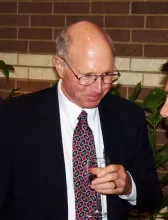
Dr. Robert W. (Bob) Glover left us on May 4, 2026. He was 82 years old and had suffered a series of strokes and infections in recent years that left him confined to a wheelchair and made communicating difficult. I made time to visit with him whenever I was in town as did friends and former students.
I wanted to do more than say “Goodbye” to Bob. He was an integral part of my life since we first met as students in economics at The University of Texas at Austin in 1968. I was in my senior year as an undergraduate and Bob was in his second year as an economics graduate student. Neither of us knew at the time that our professional lives would be intertwined, personally and professionally, for much of the next sixty years!
Early Years
Bob was born and raised in Sherman Oaks, a well-to-do neighborhood of Los Angeles, California, the oldest of six children born to an advertising executive and a homemaker. He is survived by his brothers, Dick, Chris, and Dave, and his sister Kathy, and six nieces and nephews. He was preceded in death by his sister Patti. Bob grew into a really tall man, around 6’4” in height. But, despite his size, he did his best to be unimposing, much like his good friend the late Hugh Smith with whom he conducted research and taught. Several years ago, Bob shared with me that he was a surviving twin and that, from birth, he had always felt that an important part of him was missing. I wondered if that was a large part of what drove Bob to be such an introspective and generous person.
Studies
Bob earned his undergraduate degree in economics from Santa Clara University in 1965, and his PhD in economics from The University of Texas at Austin in 1972, where he studied under Ray Marshall, Vernon Briggs, Jr., Stephen McDonald, Niles Hansen and others. He was never one to put himself forward, choosing instead to observe and speak quietly after others had offered their views. But, when he spoke, others listened carefully because he often shared insights that others may have overlooked. His fellow students, myself included, viewed Bob as sort of a walking, talking encyclopedia: he was well read and seemingly retained everything! You definitely wanted Bob to be on your debate team!
He pursued in-depth studies in labor economics and related areas, including a wide range of topics surrounding the nature of work, training, and apprenticeship. These topics formed the basis for many of his books, chapters and reports.
Career
Ray Marshall, who would subsequently become Secretary of Labor under President Jimmy Carter in 1977, had been recruited as the head of the University of Kentucky’s Department of Economics in the mid1960s but returned to The University of Texas at Austin as the Audre and Bernard Rapaport Centennial Chair in Economics and Public Affairs in 1969. As part of the effort to secure his return, The University offered Ray the opportunity to create the Center for the Study of Human Resources, a practically oriented center where faculty, students and practitioners would work together to address pressing problems involving human resources. Ray hired Bob as the Center’s first paid staff member when it opened its doors in June 1970 in the basement of Waggener Hall. In the Center’s first decade, Bob worked on developing a rural healthcare workforce in Texas, agricultural labor issues, and apprenticeship in the construction trades, among others.
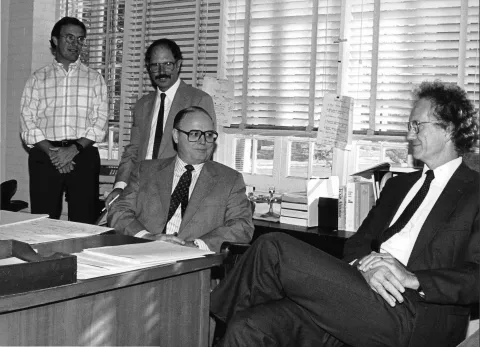
When Ray became Secretary of Labor in January of 1977, Bob became the Center’s director and served in that capacity until 1985, a period during which the Center served as one of a dozen or so Manpower Institutional Grantees working closely with professionals around the country in the growing field of manpower training, now referred to as workforce development. He also led demonstration projects on Minority Women’s Employment and Apprenticeship Outreach that connected him with future Secretary of Labor Alexis Herman, future Assistant Secretary of Labor Ernest Green (spokesperson for the Little Rock Nine) and Lamond Godwin, among others. Bob would spend his entire career at the Center until his retirement in 2012, although his work took him all over the country and the globe.
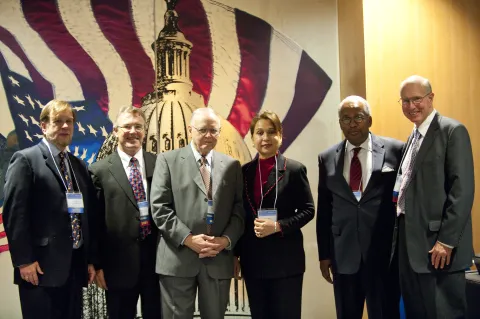
Bob specialized in studies of education, labor markets, learning and work for more than four decades. His research focused on human resource development, including K-12 education, remedial education and basic skills, postsecondary education, vocational preparation and apprenticeship, school-to-work transition, workforce development in agriculture, industry training practices, employment discrimination and skill standards. He authored many reports, articles and books on these topics over his lengthy career.
Bob was also a Lecturer at the LBJ School of Public Affairs where he taught and mentored generations of students, many of whom became acknowledged leaders and experts in their fields here and abroad. Bob always made time for his students and colleagues and enhanced their work with thoughtful comments. He was known for sending out thoughtful notes as follow-ups to meetings with students and visitors.
Major Contributions
Bob served on several national commissions, including the Carnegie Action Council on Minority Education, which produced the report Education that Works: An Action Plan for the Education of Minorities (1990) and the Commission on Skills of the American Workforce, which produced the highly influential report, America’s Choice: high skills or low wages! (1990). The recommendations that were part of America’s Choice formed the basis for national legislation and practice for the next twenty years or more (e.g., school-to-work). Bob also served as member of the Construction Industry Craft Training Research Team 231 for the Construction Industry Institute (2006-7) which produced a number of major documents on craft training.
From 1978 until 1982, Bob served as Chairman of the Federal Committee on Apprenticeship, which was initially established in 1934 as the national advisory body to the Secretary of Labor regarding apprenticeship training. He was appointed by his mentor, former Secretary of Labor Ray Marshall. Bob was widely recognized as one of the leading experts in the world on apprenticeship training and wrote extensively on the subject, including many reports and articles and books, which are listed on his final resume.
At home, Bob was directly involved in developing the educational structures to facilitate school-to-work transitions in Central Texas. From 1999 to 2004 he served as a founding Member of the Board of Directors of the Capital Area Training Foundation (now Skillpoint Alliance). He also worked closely with LBJ School professors Walt and Elspeth Rostow in 1992 to create The Austin Project to improve the lives of children, youth and families in part through supporting the establishment of Community Schools and Family Support Centers in Austin. In 2017, the Austin Project merged with Austin Voices for Education and Youth, which continues its work.
Before his retirement, from 2008-2012 Bob served as a key member of the team that designed and implemented Tulsa’s award-winning CareerAdvance® Project, which trained the mothers (and fathers) of Head Start children for rewarding careers in healthcare. The team was comprised of staff from the Ray Marshall Center at The University of Texas at Austin, the Center for the Developing Child at Harvard, and the Community Action Project of Tulsa County.
Bob also was active in creating and supporting Austin’s Sister Cities program, promoting student exchanges between Koblenz, Germany and Austin. He traveled as a member of the Mayor Kirk Watson’s delegation to Koblenz in 1998 and often hosted government, industry and labor delegations from Koblenz and other cities in Austin.
Personal
Bob married UT education professor Toni Falbo in 1981. They traveled all over the world—including trips to Argentina, Chile, New Zealand, China, Kenya and Europe—and enjoyed camping and hiking in the U.S. In the early 2000s, they joined a Zoo Keepers Safari in Kenya that was arranged by Bob’s late sister Patti, who was a longtime activity coordinator at the San Diego Zoo. They shared dazzling photos of the wildebeest migration that were taken from a hot air balloon on that tour.
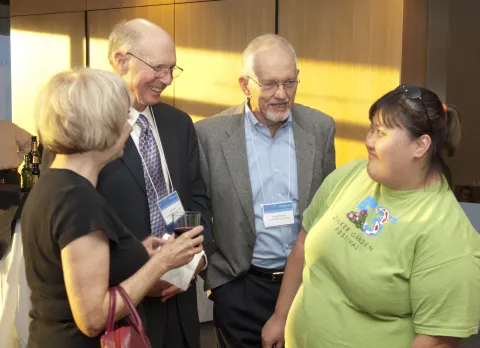
In 1985, Bob and Toni adopted their daughter, Rachel, from Korea. In 2021, they were blessed by the birth of a granddaughter, Faith. Bob was devoted to his family and, even before his retirement, spent much of his free time doting on Rachel and Faith.

If you'd like to share a comment about Bob to be included in this tribute, please email rmcinfo@raymarshallcenter.org.